


Project Overview
With the widespread application of digital and intelligent technologies in urban management, public facility maintenance, and safe operation, traditional manual inspection methods are gradually being upgraded and transformed into intelligent inspection systems. Intelligent inspection, through core technologies such as the Internet of Things (IoT), Artificial Intelligence (AI), mobile communication, and data analytics, enables real-time monitoring, intelligent identification, and risk warning of facility operation status, improving inspection efficiency, accuracy, and safety. It is a crucial tool for promoting the digitalization of urban infrastructure.
This project addresses the actual needs of intelligent road inspection in Ma'anshan City, providing a comprehensive, integrated intelligent road inspection solution for diverse road scenarios, including national and provincial highways and rural roads. By deploying intelligent inspection equipment on various everyday vehicles such as three-wheeled inspection vehicles, buses, and road administration vehicles, the project integrates inspection capabilities into existing city and county-level platform systems, constructing a normalized, three-dimensional road inspection network. This achieves automated inspection processes, real-time data collection, and visualized management results, comprehensively improving road inspection efficiency and the level of refined management.

Demonstration and guidance
Create replicable best practices in the industry.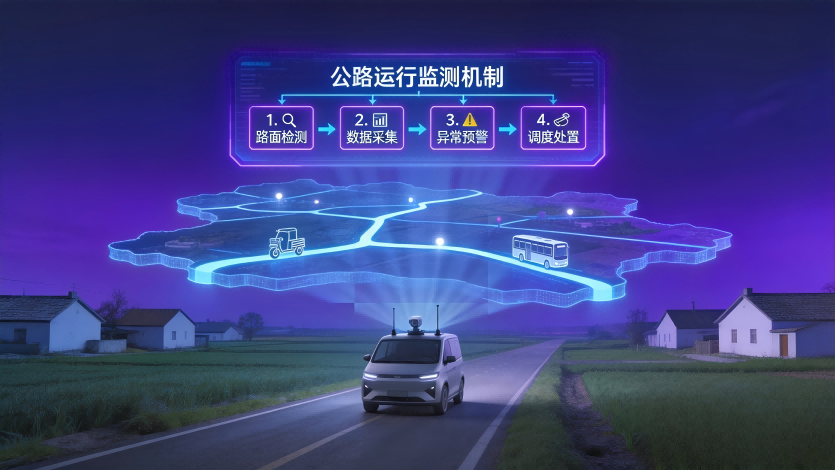
-
Intelligent inspection of rural roads
By employing video and sensor fusion technology, road surface defects and safety hazards are automatically identified and early warnings are triggered.
-
City and county-level integrated platforms
To achieve unified display and cross-departmental sharing of traffic data, maintenance records, and accident information.
-
Highway operation monitoring mechanism
Establish a closed loop for data collection, operational analysis, and information dissemination to form a quantifiable management process.
Application effectiveness
Helping Ma'anshan City build an efficient, safe, and visible road inspection system-

Wide coverage and rapid efficiency improvement
By deploying intelligent inspection equipment on vehicles such as three-wheeled inspection vehicles, buses, and road administration vehicles, "inspection while driving and coverage during daily operations" can be achieved. Without increasing personnel, the frequency and coverage of highway patrols can be greatly increased, effectively solving the problems of insufficient coverage and low efficiency of traditional manual inspections.
-

More timely detection, more proactive management
Leveraging intelligent sensing and data analysis capabilities, the system can automatically identify and locate road surface defects and abnormal road facilities, and simultaneously upload the information to the management platform. This enables a shift from "post-event discovery" to "timely perception and proactive handling," significantly improving the efficiency of discovering road safety hazards and enhancing emergency response capabilities.
-

Process visualization and management transparency
The entire inspection process is tracked, data is recorded, and results are visualized. Managers can monitor the inspection progress, problem distribution, and handling status in real time, providing reliable data support for inspection assessment, maintenance decisions, and work evaluation, and promoting the transformation of road inspection from experience-based management to data-driven and refined management.
