


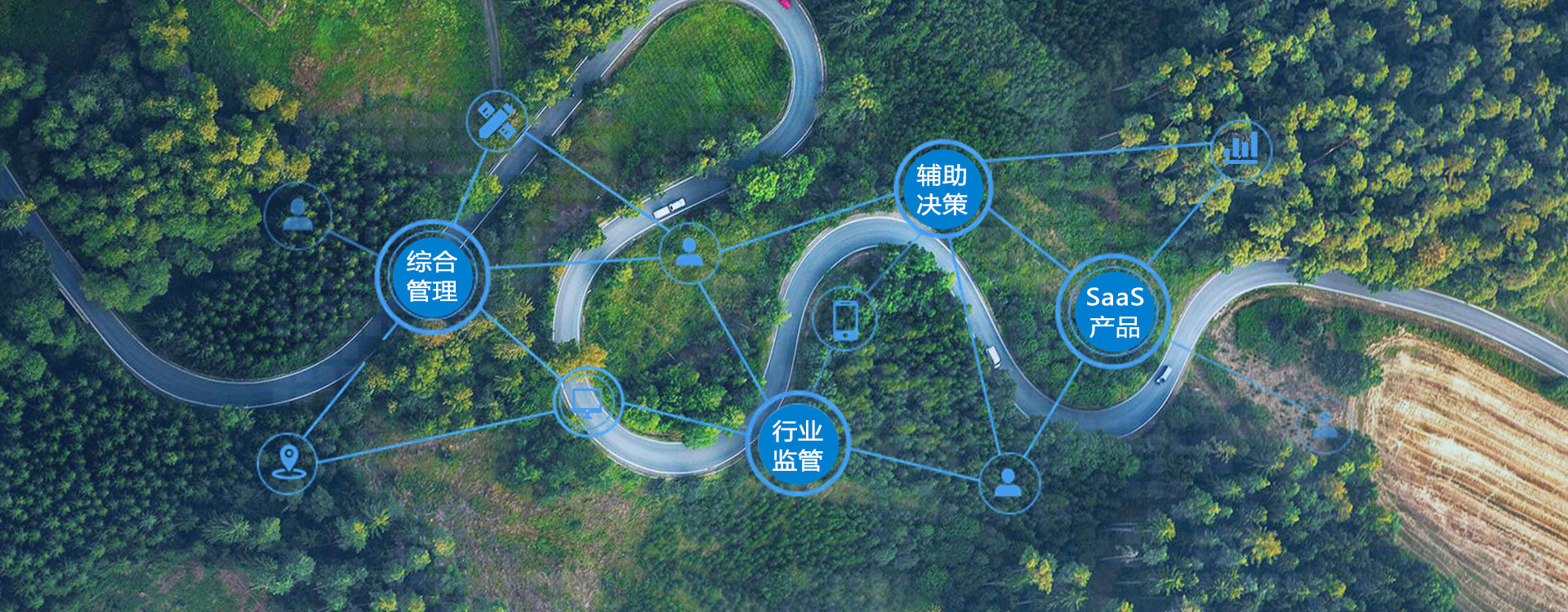


Construction Background
With the deepening of a new round of technological revolution and industrial transformation, digitalization, networking, and intelligentization have become the core driving forces for economic and social development. Currently, the Chinese government is committed to promoting the modernization of the national governance system and governance capabilities. Against this backdrop, government informatization faces new opportunities and challenges:
Policy guidance-driven: At the national level, strategies such as "Digital China", "Cyber Power" and "Big Data Development" have been continuously released, clearly requiring the acceleration of the construction of digital government and the improvement of government performance capabilities through digital means.
The need to upgrade governance capabilities: Traditional government management models have bottlenecks in addressing complex economic and social problems, improving the precision of public services, and optimizing the business environment. There is an urgent need to achieve process reengineering, data-driven approaches, and intelligent decision-making through information technology.
Rising public expectations: Businesses and the public have an increasing demand for government services that are accessible online, available across provinces, offer immediate response, and are personalized. They require the government to provide a convenient, transparent, and efficient service experience that is commensurate with the Internet era.
Application scenarios
Original technology enables business and services

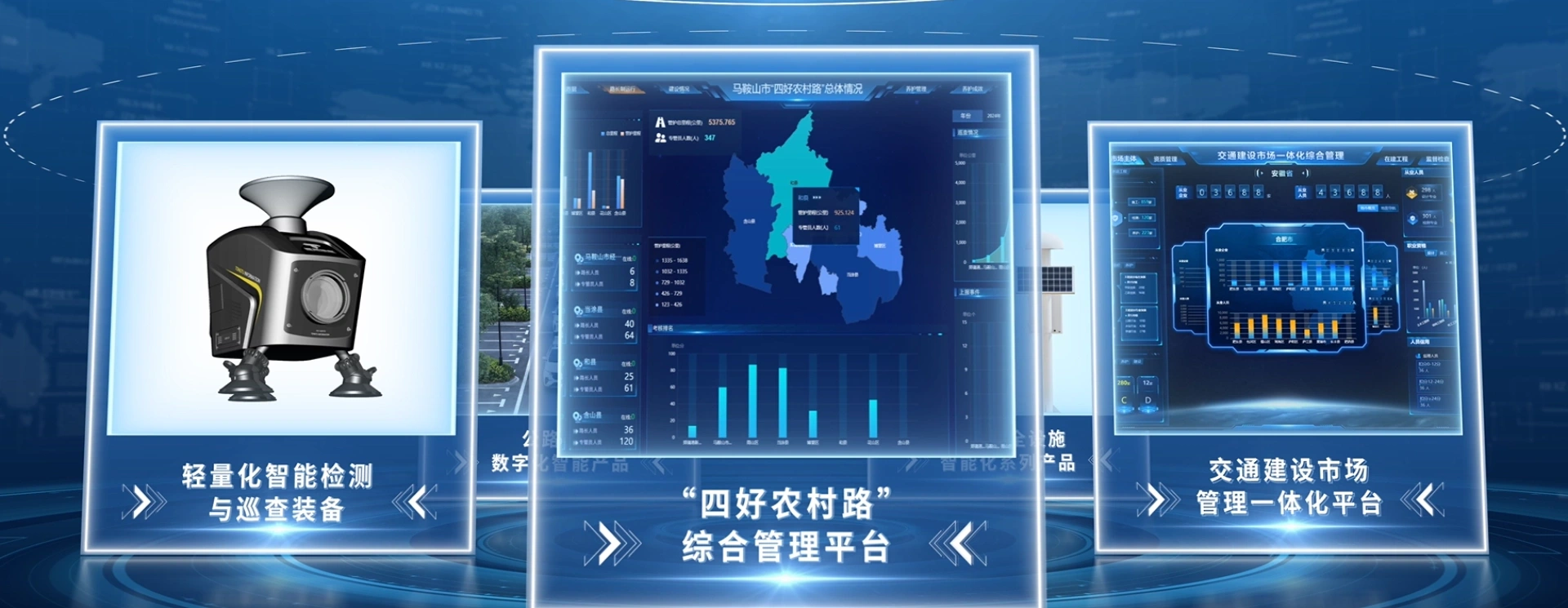

Core Values
Intensive and economical construction, system interconnection, data sharing and business collaboration
-
Strengthen the data foundation
Establish a normalized data governance mechanism, promote the integration and sharing of basic and thematic databases, and provide core data support for cross-level, cross-regional, and cross-departmental business collaboration.
-
Building a digital government
By integrating data resources from government departments at all levels, a unified information sharing network will be built to realize a new model of "one-stop online government services".
-
Promote collaborative governance
Break down departmental information barriers, promote cross-level and cross-departmental business communication and collaboration, and build a new pattern of overall government service efficiency.
-
Improve service efficiency
Establish a big data early warning and analysis mechanism, strengthen real-time monitoring in key areas, enable early detection and early handling of problems, and improve the government's ability to conduct precise supervision.
Application Cases
-
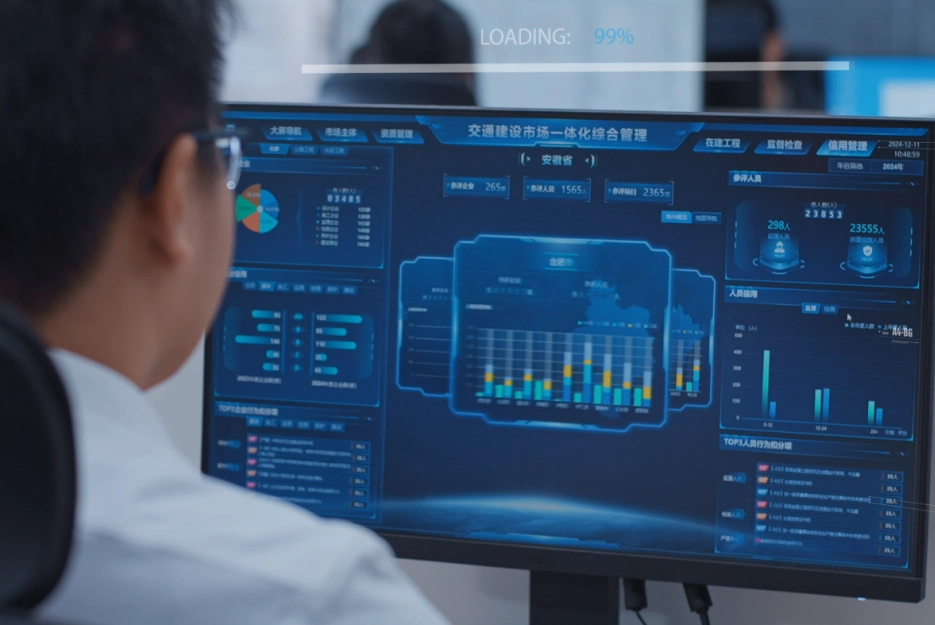
Integrated Management of Transportation Construction Market
To address pain points in the transportation construction market, such as information silos, incomplete credit data collection, and lagging dynamic supervision, as well as the low efficiency of manual management and insufficient application of data value, our company undertook the Anhui Provincial Transportation Construction Market Integrated Management Project. This project, overseen by the Anhui Provincial Department of Transportation and implemented by the Provincial Transportation Comprehensive Law Enforcement and Supervision Bureau, focuses on all aspects of the "credit-qualification-bidding-supervision-quality-cost" process, creating eight major business application modules.
The project relies on Anhui Provincial Government Cloud and domestically developed technology stack to achieve basic information management of industry credit, establish a unified expert database for the entire province, and control key information in multiple dimensions such as bidding, progress, and quality of key provincial projects. It also covers the entire bidding process management and real-time evaluation of bidding behavior, conducts cost data collection, material price reporting and supervision, completes the registration, behavior management and credit evaluation of industry practitioners, and builds a fully integrated management system.
-

Anhui Provincial Rural Road Construction Planning Management Platform
By deeply integrating next-generation information technologies such as big data, cloud computing, and mobile internet, and relying on basic data of rural roads across the province, statistical annual reports, and historical construction project data, the system will achieve business functions such as establishing a project database, compiling and managing annual plans, and seamlessly connecting with relevant planning systems of the Ministry of Transport. During the 14th Five-Year Plan period, the focus will be on deepening connectivity, networking, and upgrading to improve the accessibility and service level of rural roads and build a widely covered rural road network.
-

Verification of basic data for the "three indicators" in Anhui Province
To better serve the needs of rural road construction across the province and further promote high-quality development of highways, our province has organized a survey and verification of the completion status of three objectives: connecting townships with Class III or higher highways, connecting larger natural villages (20 households or more) with paved roads, and connecting administrative villages with two-lane highways. This comprehensive survey aims to clarify the current situation, identify shortcomings and weaknesses, and provide accurate data for scientifically planning rural road construction in the later stages of the 14th Five-Year Plan, optimizing fund allocation, and formulating categorized promotion policies. This will help build a widely covered, structurally sound, safe, and convenient rural road network.
-

Refined Improvement of Highway Safety Facilities and Information Services
In order to thoroughly implement the spirit of General Secretary Xi Jinping's important instructions and directives on work safety, earnestly implement the relevant decisions and deployments of the Provincial Party Committee and Provincial Government, and the work requirements of the "Notice of the General Office of the Ministry of Transport on Further Strengthening the Service and Safety Guarantee Capabilities of Rural Road Facilities" (Jiaoban Gonglu Han [2021] No. 690), in 2022, the Anhui Provincial Department of Transportation fully launched the Highway Safety Facilities Refined Upgrading Project. It plans to basically eliminate major safety hazards on rural roads throughout the province within three years, further improve the safety protection level of rural roads, and safeguard the lives and property of the people.